
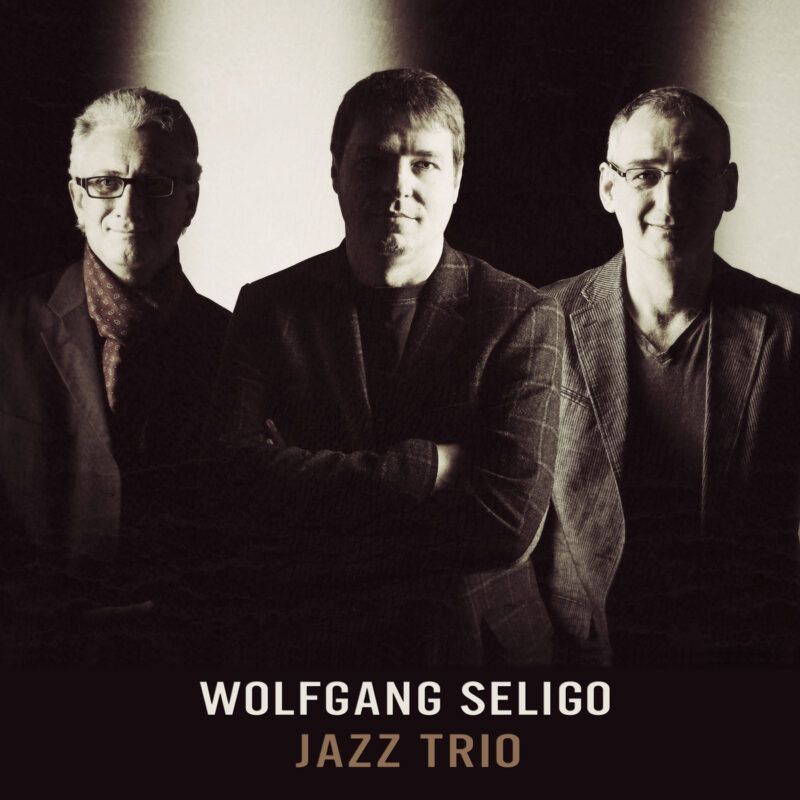
“Major Max” brings the jazz richness harmony, elegance of Baroque music and the infectious rhythms of funk in a composition that invites listeners to groove and swing along. Performed by pianist and composer Wolfgang Seligo with double bassist Peter Strutzenberger and drummer Heimo Wiederhoer, the piece draws on contrasting musical traditions to create a sound that is sophisticated without losing its sense of fun. Through its classical influences, impressionistic harmonies and expressive jazz solos, “Major Max” offered a meeting point between intricate musicianship and an easy, engaging groove.
One of the defining features of “Major Max” is its interpretation of jazz harmonies through a Baroque-inspired approach. The influence of classical music brought a sense of structure and detail to the composition, while the jazz framework allows the musicians to explore those ideas with freedom and spontaneity. Rather than treating these styles as separate elements, the piece brought them together in a musical conversation, allowing the elegance of classical harmony to coexist with the relaxed character of jazz.
Funk adds an important dimension to the song. Its rhythmic influence gives the music forward momentum, creating a lively foundation for the melodic and harmonic ideas to develop. The interplay between detailed harmonies and an infectious groove helps “Major Max” balanced complexity with accessibility.
The impressionistic harmonies further shapes the song’s character, adding colour and atmosphere to its musical landscape. These harmonic touches allows the composition to move beyond straightforward melodic development, creating a richer listening experience as the different influences interact. The result is a sound that feels varied and expressive, with the music able to shift between moments of harmonic sophistication and passages driven by rhythm and movement.
The solos gives the performers room to express their individual musical voices while remaining connected to the wider arrangement. Rather than interrupting the composition, these moments of improvisation contributed to its sense of movement, allowing the music to develop naturally. The combination of structured harmonic ideas and spontaneous expression is part of what gives “Major Max” its distinctive appeal.
The classical influence helped set the piece apart from a conventional jazz-funk arrangement. Baroque-inspired harmonies brought a sense of refinement, while the funky melodies keeps the music lively and grounded in rhythm. These elements created an interesting contrast: the harmony can be intricate, yet the groove remains welcoming. That balance allowed “Major Max” to draw from different musical worlds without losing its identity.
At the centre of the performance is Wolfgang Seligo, whose work as a pianist and composer spans jazz, funk and classical influences. Seligo performed in various formations and as a solo artist, bringing his music to audiences across Europe, Asia, Africa and the United States. His international performance history includes concerts in Chicago and Washington, Beijing’s Forbidden City and Moscow’s Red Square, as well as appearances in Morocco, Senegal, Turkey, Poland, Tehran, Rome, Prague, Vienna, Budapest and Ljubljana. That broad experience provides context for his cross-genre musical approach, which brought different influences into a shared creative space.
Peter Strutzenberger contributes on double bass, drawing on experience across jazz, blues, rock and classical music. Recognised as one of Austria’s versatile bass players, he accompanied European jazz musicians including Karl Ratzer, Harri Stojka and Dana Gillespie. His experience includes classical music productions at the Vienna State Opera and concerts with internationally acclaimed performers such as Red Holloway, Big Jay McNeely, Howard Alden and Axel Zwingenberger. His broad musical background complements the varied influences heard in “Major Max,” where the bass helps connect harmonic movement with the rhythmic drive of the piece.
On drums, Heimo Wiederhoer brought an experience rooted in both jazz and classical music. He performed with a wide range of artists, including Sheila Jordan, Albert Mangelsdorff, Bill Dobbins, Jimmy Knepper, Ron McClure, Andy Bey, Jarmo Savolainen, Phil Markowitz and Ed Neumeister. His collaborations have also included Karl Ratzer, Gustavo Bergalli, Fritz Pauer, Steve Gut and Boško Petrović.
Wiederhoer was a longtime member of the Karlheinz Miklin Trio and also worked with Harri Stojka. His background across different musical settings supports the rhythmic flexibility required by a composition that moves between classical influences, funk and jazz improvisation.
Together, Seligo, Strutzenberger and Wiederhoer created the musical foundation for “Major Max” with piano, double bass and drums allowing the composition’s different elements to interact. The instrumentation provides room for harmonic detail, rhythmic interplay and individual expression, while the musicians’ varied experience supports the piece’s movement across genres. Their collaboration reflects the central idea behind the song: music can draw on contrasting traditions while remaining cohesive and enjoyable.
Ultimately, “Major Max” celebrates the possibilities that emerge when jazz, funk and classical music meets. Wolfgang Seligo, Peter Strutzenberger and Heimo Wiederhoer brought these influences together through a composition that values both craftsmanship and spontaneity. Its blend of Baroque-inspired harmony, impressionistic colour, funky melodies and jazz solos creates an inviting musical experience that encourages listeners to engage with the detail while following the groove. With its balance of sophistication and rhythmic energy, “Major Max” offered a lively reminder that musical exploration and pure enjoyment can go hand in hand.