

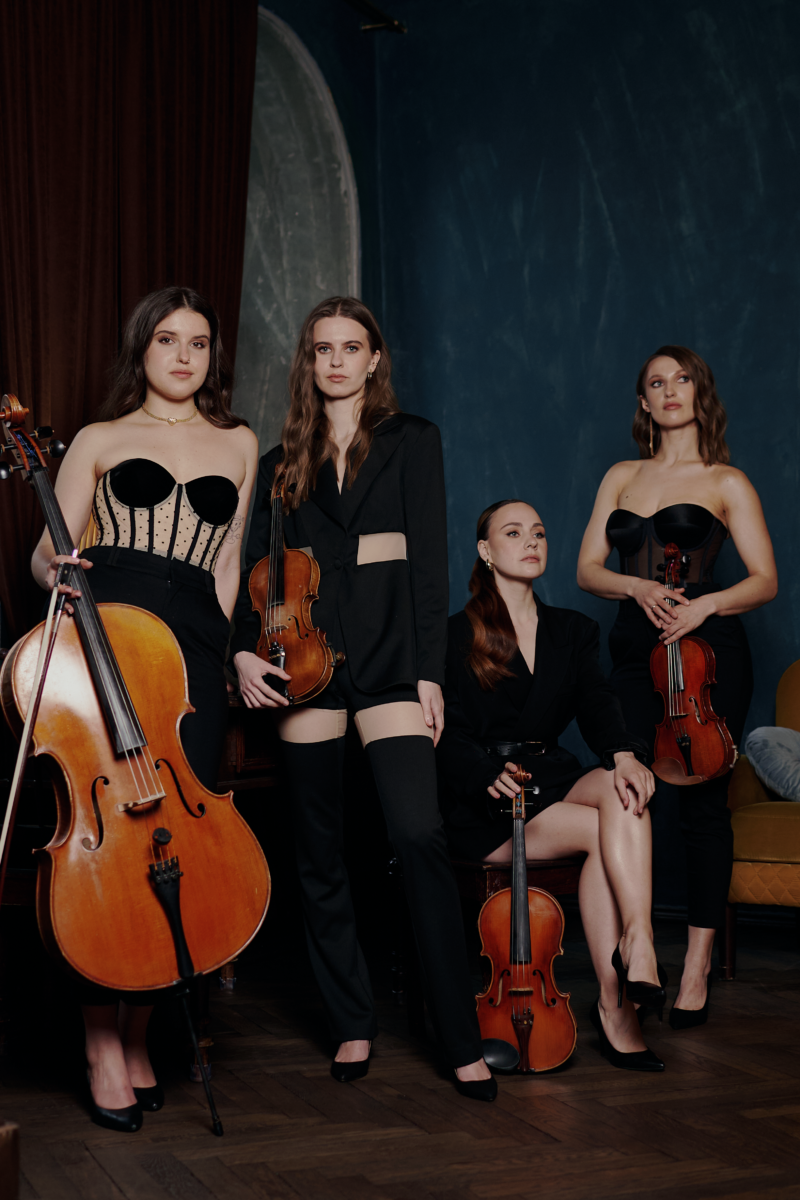
A piece of music can preserve a connection to the past long after the people behind its story have disappeared from the stage. In a new string quartet recording, Una Lengua Infinita revisited Johann Strauss II’s “Pepita-Polka” bringing the nineteenth-century composition into a fresh instrumental arrangement, performed by Ukrainian ensemble Infinito String Music.
Adapted from the original piano score, the recording presents the polka through a string quartet, retaining its lively, dance-oriented character while giving the composition a different musical setting. The arrangement offers a new way to hear Strauss’s work while maintaining its connection to Pepita de Oliva, the Spanish dancer from Málaga whose fame spread across Europe during the mid-nineteenth century.
Known as “The Star of Andalusia,” Pepita de Oliva left a cultural legacy that extended beyond her performances. Her name became associated with Strauss’s composition, giving “Pepita-Polka” a historical connection that Una Lengua Infinita brings forward through the new recording.
Performed by Infinito String Music and produced by Una Lengua Infinita, the arrangement focuses on reinterpreting the original piano version for strings. Rather than presenting the composition in its original format, the recording offered listeners an opportunity to encounter the work through a different ensemble while preserving its identity as a spirited polka.
With the interpretation, “Pepita-Polka” returns to listeners in a new form, keeping Johann Strauss II’s composition in circulation and renewing its connection to the story of the dancer whose name it carries.