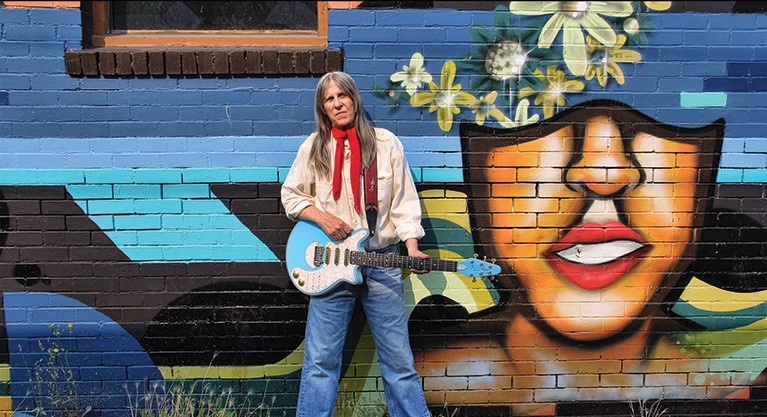

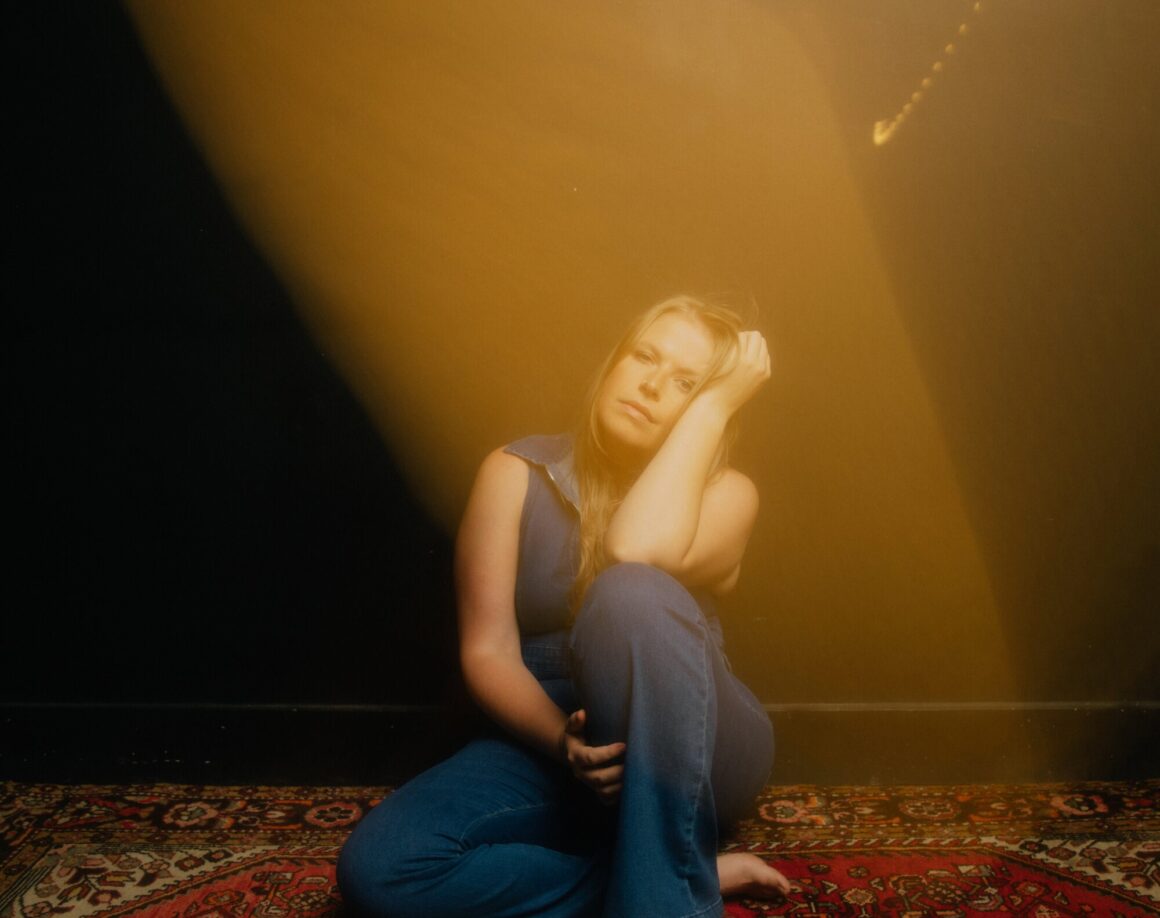
For Charlotte Morris, being an artist is not simply a career choice. It is a fundamental part of who she is. A singer, songwriter, multi-instrumentalist and storyteller, the Philadelphia-born artist has spent years developing a sound rooted in folk and Americana while drawing from the personal experiences, relationships and social questions that shape her world.
Now, Morris is turning that voice toward one of her most politically charged releases yet. Her new single, “Make America,” arrives as the United States marks its 250th anniversary, using the traditions of American protest folk to examine the country’s current political and social climate. Rather than offering easy answers, the song asks difficult questions about patriotism, compassion, collective responsibility, and what it really means for America to be “great.”
For Morris, those questions are deeply personal. Written at the end of 2025, “Make America” grew out of her own frustration and uncertainty about the direction of the country, while still holding onto the possibility that change can happen when people refuse to feel isolated. The result is a song that transforms anger and uncertainty into a call for reflection, community, and hope.
That spirit has become increasingly central to Morris’s artistry. Her connection to protest music was shaped by the folk tradition she grew up with, including the work of Joni Mitchell, Peter, Paul & Mary, Joan Baez and Bob Dylan. Her experience performing alongside folk legends during Lonesome Traveler also helped deepen her understanding of music as a vehicle for storytelling, social commentary and connection.
As an independent artist, Morris has also found the freedom to make music entirely on her own terms. From deeply personal songwriting to openly political material, she views every release as an authentic piece of herself, a philosophy that has helped define her career and strengthen her connection with audiences.
“Make America” is the first half of a two-song protest collection, with the deeply personal “What Am I Doing?” following in August. Together, the songs move from the biggest questions about the country to the deeply intimate question of what one person can do in the face of overwhelming circumstances.
In this conversation, Charlotte Morris opens up about the person behind the music, the inspiration and frustration that fueled “Make America,” the folk legends who shaped her songwriting, the realities of remaining independent, and why, even in difficult times, she believes people must continue to speak up, build community, and hold on to one another.
For readers discovering you for the first time, who is Charlotte Morris?
Charlotte: Ahh okay tough question! Because how do I succinctly sum up everything that I am? I am a lot of things.
First and foremost though, I am an artist; I am a musician; I am a songwriter. It’s not just something I do, but it’s what I am. I’ve actually been diving into this very thing in therapy recently because I feel like I have two very strong parts of my brain. On one side, I’m such a type-A person, and so there’s a huge part of me that really values order and structure and stability and, you know, having plans for my future. It’s the part that enables me to hustle in the music industry and get to where I am today. But then there’s another huge part of me that is this creative. This artist. I love adventure. I love being on the road. I need spontaneity. I get bored if my life is too monotonous. I’m an emotional person, and I need to be able to express myself. I love being on the stage. And it goes on and on. So in therapy, I’ve been diving into: how do these two parts of myself work in harmony? And one of the biggest realizations that came out of the first conversation on this topic is that, at my core, I am an artist. It is not something that I do; it is literally a piece of who I am. And I cannot sacrifice that piece of me for anything. It would mean fundamentally changing who I am. I’ve said this before, but if there were other ways I could see myself being happy, I would do it. Being an artist, a musician, it’s really frickin hard. But I didn’t choose to do this; it chose me.
Beyond that… I am curious. I’m competitive. I love a game, a game night. I love my New York Times crossword. I am an avid reader. I am an adrenaline junkie. I am an adventurer. I am a van-lifer. I am a woman. I am a daughter. I am a sister. I am a friend. I think that I’m incredibly loyal, and my relationships are one of the most important things in my life. I’m a dog mom. I’m a child of divorce. I’m a romantic. I’m whimsical and a little witchy. I’m resilient.
I don’t know, I could keep going on and on. I feel like there are so many pieces, both massive and tiny, that make up who I am as a whole. But hopefully that gives people at least a little bit of an idea.
“Make America” arrives during America’s 250th anniversary. Why did this moment feel like the right time to release a song like this?
Charlotte: I wrote this song at the very end of 2025, and I feel like the second I finished it, I knew I needed to release it soon. A huge part of that is because we are in such a tumultuous political climate, and unfortunately, I don’t see it getting any better anytime soon. In fact, I think it’s going to get a lot worse before it can get any better. Things have escalated so quickly in the last year and a half, even in the last seven months! And because of that, now, more than ever, people need an outlet. They need to know that they’re not alone. They need to feel heard and seen in a way that our government is not doing. Right now there’s a feeling that we, as a people, are not being listened to by all sides of the aisle. And so, if our elected officials, the people who are supposed
to be working for us, are not listening, and are not speaking up, then it falls to the people. And it falls to artists, more specifically. Creating political art and protest music is nothing new. And it’s a tradition that I’m proud to uphold, though devastated that it’s necessary. If I can bring people a little comfort and solace – a little bit of hope to know that I hear them. I’m here with them. And perhaps to get people curious, questioning, thinking through ideas they hadn’t considered before. Well, that’s a first step forward. And the only way through this dumpster fire is together.
You describe the song as being rooted in frustration but ultimately driven by hope. How did you strike that balance without letting one emotion overpower the other?
Charlotte: I’m going to be honest – recently, I have been finding it extremely difficult to hold on to hope. I feel as if this country, my home, is being overrun by the worst kinds of people, and it is crumbling under the weight of those people. And historically, this is not new! Historically, we have never been the land of the free for everyone. We have never been an American dream for everyone. There has always been discrimination. There has always been bigotry. There has always been hatred. So when you look at today, and you put it in the context of the history of this nation, God, it’s hard to have hope. Because this isn’t just 10 years of one bad actor that we are trying to come back from. This is 250 years of systemic pain and murder and discrimination. How do we find a better path forward when we never had that great of a path to begin with? How do we find a future without burning it all down and starting from scratch? I don’t know.
I say all of that because that thought process, those feelings, this overwhelming sadness, is something that hits me a lot more than hope hits me these days. However, when you look to our history, you also see incredible leaders and activists and writers and musicians and thinkers that have paved the way for us to make progress even amidst all of the negativity. And if they could make a difference in the 1950s and 60s – if they could make a difference in the 1920s – if they could make a difference in the 1890s – then we can make a difference today. You just have to hold on to that. And it’s really hard. I don’t always do a good job at striking a balance. I think, oftentimes, I feel unable to find that hope. But then I will hear a song. I will talk to a friend. I will read an article from a journalist doing incredible work. And I can see these glimmers from people out there fighting, just like me. And like that, I hope this song does the same for somebody else. These things remind me that I am not alone. I am not isolated and that is the strongest power that we have against a tyrannical government. To know that we are not alone, and that we are powerful together? That terrifies them, because they want us to feel alone. They want us to feel like there’s no shot in hell that we will beat this, that we will beat them and their hatred. But that is not true, and our history proves that; international history proves that. And that’s what we have to hold onto.
American folk music has a long history of social and political commentary. How did artists like Joni Mitchell, Peter, Paul & Mary, or other folk icons influence your approach to writing this song?
Charlotte: Some of my biggest inspirations in all of my writing are artists like Joni Mitchell, Peter, Paul, Mary, Joan Baez, Bob Dylan… folk icons who have, throughout history, written music as social & political commentary. These are inspirations I pull from every day. Because I grew up with that music – because my parents were constantly playing this American folk music on car rides – it’s so woven into who I am and so ingrained in the kind of music I create. To me, “Make America” doesn’t feel that different from my other songs. Yes, it is more outwardly speaking to the political state of this country, but still feels cohesive with the rest of my catalogue, both in tone, in topic, and in musicality.
“Make America” tackles a deeply polarizing subject. Were you ever concerned about how different audiences might interpret or react to the song?
Charlotte: To be quite honest, my biggest fear when releasing “Make America” is that, somehow, someone would think that I was on the opposite side of things. I feared that they would hear “make America” and would automatically think MAGA or think that this was some blindly patriotic song. And truthfully, if you listen to the lyrics, even halfheartedly, it is very obvious that is not the case, but it was my biggest fear haha
On the flip side, my fear is never the other way around. If somebody hears this song and they get mad about it, that’s not necessarily somebody that I need or want as a listener or a fan or a follower. Simultaneously, if somebody listens to this song and they get mad because I want kids to live and I want our flag to represent something positive and I want us to share values like respect, compassion, empathy, and love… if that angers them, that says so much more about them than it says about me and my music. And that’s something they should really be exploring in therapy.
Combining acoustic guitar, soaring strings, and your violin created a powerful emotional landscape. How did those instrumental choices help tell the story?
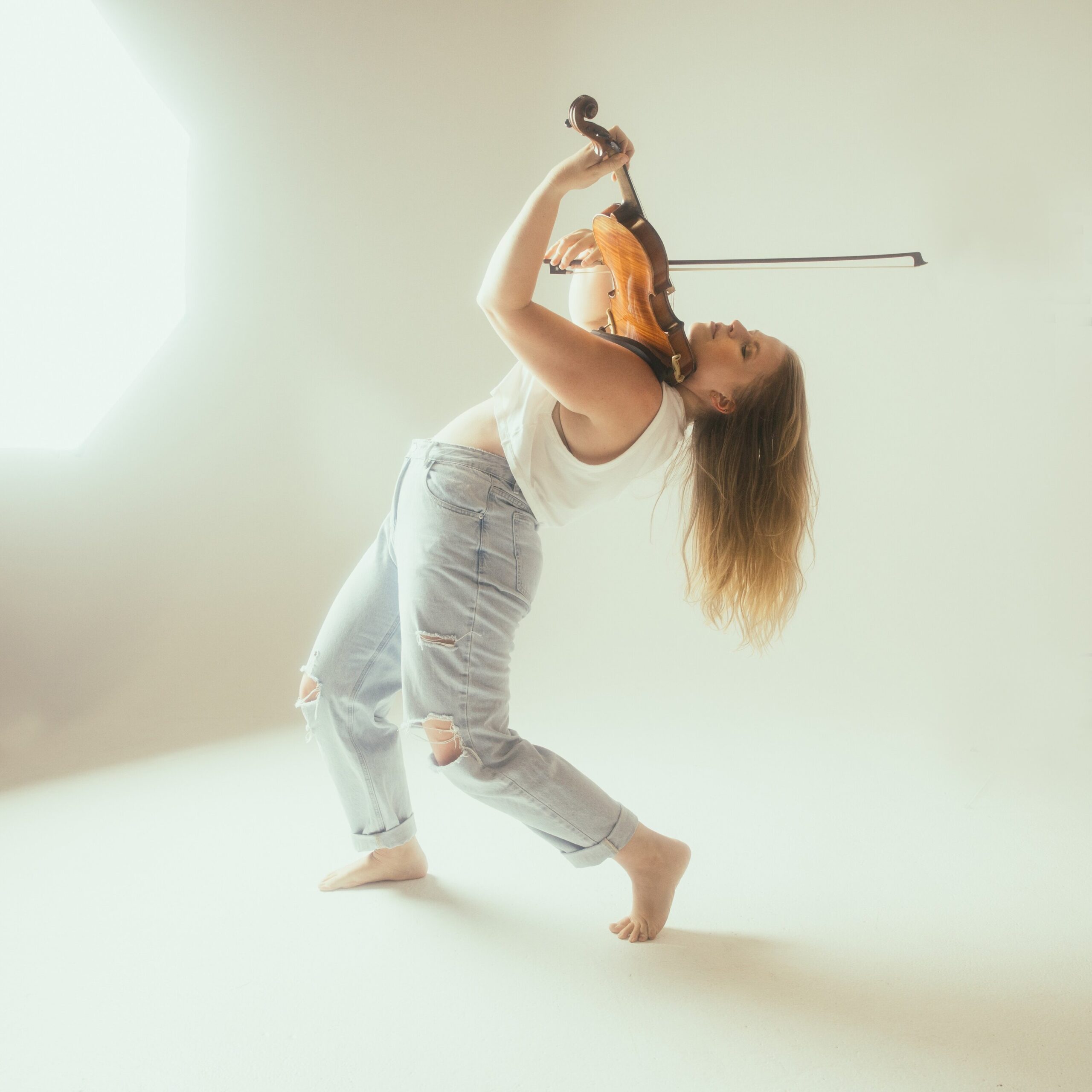
Charlotte: I use violin a lot in my music because it was my first instrument. I started playing when I was four, and so it sits at the foundation of my musical knowledge. It’s something that I really love incorporating into my music now, and it feels natural to pull from it. However, with this song in particular, I think that violin and strings speak to this larger, more epic orchestration that people often associate with anthems and with songs like “America, the Beautiful,” “The Star-Spangled Banner,” etc. I think combining the folk guitar with soaring and epic strings serves to tie these two genres of music together in a way that really fits with the message of the song. I think it lands the idea that in order for us to have a nation that these songs say we strive for, we have to focus on the people. On the grassroots, folk-driven, community-minded people.
Did conversations with audiences or experiences shape the ideas that eventually became “Make America”?
The idea that became “Make America” pulls primarily from my ongoing experience as an American, and as someone who is deeply struggling with the state of this nation. It’s hard to reconcile my involvement as a member of this population in the hatred and death that is happening in our country and also worldwide because of our country. And the song was born from questions that I feel like I’m constantly yelling when reading the news, scrolling on social media, etc. Part of it, though, definitely came from conversations with audiences.
Once Trump got back into the White House, I started closing out my live sets with a song of mine called “Freedom.” This is a song that I wrote back in 2018, and it’s one that I played a lot during his first term. Once he left office, I kind of retired it – not fully, but it just didn’t feel as necessary to include in my shows. However, when he came back into office, it, unfortunately, once again, felt very relevant. I started closing out all of my shows with the song, and the feedback that I got was really powerful to hear. People were really moved to hear the song, and they really appreciated me using my voice in that manner. So I don’t think that those conversations necessarily shaped the idea for “Make America,” but they definitely propelled me to intentionally write more protest music. Since finishing “Make America” at the end of 2025, I’ve written a bunch of additional protest songs; one will be coming out in August (so, very soon!); another I love, I finished in June. I don’t have plans to record and release it yet, but I feel really strongly about it – and those are just to name a few. I think that the audience conversations have reminded me just how powerful music can be and how necessary songs like this are in a political climate like the one we have today.
This single is the first release from a two-song protest collection. How do the two songs complement each other, and what larger story are you hoping to tell through them?
Charlotte: Yes! I am so excited to release the second song in this collection! I think the songs complement each other really well because “Make America” is this overarching, big-picture song. It asks big questions that we don’t, or can’t, necessarily have the answers to right now. It is universal in its reiteration of questions that I ask constantly and also hear from my friends, journalists, people on social media… These are questions that so many of us are wondering.
On the flipside of that, the second song coming out in August is called “What Am I Doing?” and it is so deeply personal and specific to me and my family. It explores the lives and legacies of my father’s parents, who were both extremely active leaders in the civil rights movement down in Georgia, and in the fight against the death penalty as a part of the ACLU. They lived their lives in such an inspiring way, and the song is basically about my personal struggle to try to live up to these giants. It’s an expectation that nobody has put on me but myself, but they did so much good with their lives, and I am constantly trying to figure out: Am I doing enough? How can I make a difference? But also… how do I live? I feel like that is what makes this song relatable as well. It’s a much more intimate and deeply personal song in terms of the specificity of the lyrics. However, I feel like, especially in my generation, it’s not an uncommon question or an uncommon struggle to want to be doing more. We want to be out in the streets, to be striking, to
be putting our money where it is needed. But at the same time, we are in such an economic freefall. My generation is in such a different space financially than the generation above us and the generation above them, that there’s so much we want to do. But first and foremost, we actually have to just survive. So “What Am I Doing?” really explores that tension.
I think the two songs complement each other because we have the biggest of the big questions: can we make America give a damn? Can we make America love again? And then we have the most personal and intimate of questions: What am I doing?
Charlotte: Looking back at your journey from performing alongside folk legends on Lonesome Traveler to becoming an award-winning songwriter yourself, how has your understanding of the folk tradition evolved?
Absolutely, 1000%. My understanding of the folk tradition has evolved since performing alongside Peter Yarrow, Noel Paul Stookey, Tom Chapin, George Grove… during Lonesome Traveler. At the time, I was writing my own music, but I hadn’t found myself as a songwriter yet. So during that experience, I was just so in awe of the fact that I got to share a stage with the people I grew up listening to. But in retrospect, man, I wish I had picked their brains more about their writing processes. I was so young, you know, I hadn’t really lived yet! And I hadn’t been exposed to the type of songwriting and creative process that I’ve now been exposed to. I didn’t even realize or know to ask certain questions! However, I think that my experience with them is what started my evolution because, as we shared the stage, I got to hear their stories. And even though I didn’t ask as many questions as I wish I had, I still got to soak in pieces of who they are as people and who they are as writers and performers. I think that experience is what pushed me to break out of my comfort zone when it came to writing. I mean, that process is what inspired me to write Freedom, which was one of my very first protest songs! Lonesome Traveler inspired me to dig deeper into who I was, not just as a singer and a performer, but as a writer. Since then, I have had so many incredible, literally life-changing, experiences that have shaped who I am as a writer, but I think my time with those legends kickstarted it. They gave me a really beautiful, tangible foundation of what folk music looks like, the impact it can have, and how I can personally shape the genre today
You’ve built your career as an independent artist. How has that independence given you the freedom to write and release songs that address subjects many artists might avoid?
Charlotte: I think there are pros and cons of being an independent artist. The biggest con? Money. When I was first starting to make music, my biggest goal was to sign with a label because I felt if I signed, I would have support, I would have credibility, I would have financial backing. To some extent, that is absolutely true! But as I’ve grown as an independent artist, I’ve also grown as a person. Over the last ~10 years, I have built my confidence and self-respect, and I’ve learned so much about who I am and what makes me happy. I have realized that, for me, the pros of being independent far outweigh the cons at this point in my life and my career. Yes, it can be
exhausting to have to do it all myself. I have to fundraise, worry about how I’m gonna make the next release, or plan the next tour. I have to build my own team. Most things are 100% on me, and if I don’t do them, they don’t get done. With that said, I have complete freedom, and I have complete control. I can write what I want to write. I can tour where I want to tour. I can release songs like “Make America” and “What Am I Doing?” I think there are plenty of labels that would support releases like these, but it’s not a guarantee, and it might look a little different.
Protest songs aside, my music is so personal. My songs are about my life, my friendships, my relationships, my family, and when I record & release something, it is a piece of who I am. I can’t imagine having somebody tell me that piece of me isn’t good enough, or has to be changed for palatability or, you know, ‘we now own that piece of you because you released it under our label.’ I think, regardless of any subject matter I might be exploring, being independent allows me to do things on my terms, on my timeline, and in a way that feels 100% authentic. Honestly, I think that’s one of the reasons I’ve found some of the successes I have, because when you see a post go up on social media from me, that’s actually me. When you hear a new song by me, that’s a page ripped out of my diary. Authenticity resonates with people, and the fact that I can remain fully authentic is a huge blessing.
Any Dream Collab?
Charlotte: Oh my gosh, so many. I mean, obviously, Joni Mitchell. I would die hahaha. I would also love to collab with Brandi Carlile, The Chicks, Delta Rae, and Liz Longley! There are so many others, for sure, but those are the tops!
What’s next for Charlotte Morris after this release, and what can fans look forward to for the rest of the year?
Charlotte: Well, first and foremost, I have the next song in this collection coming out August 20 – very, very excited for everybody to hear “What Am I Doing?” Beyond that, I have an acoustic EP that will be finding its way into the world very soon. I don’t have an announced date for that yet, but let’s just say… you won’t have to wait long 🙂 I have a few more 2026 tour dates, so definitely check to see if I’ll be near you. And then, just planning for 2027! It’s going to be another great year.
Finally, message to fans and readers?
Charlotte: THANK YOU! Truly. Every individual who listens to my music, comes to a show, shares something with a friend… you make it possible for me to continue creating. That is not an exaggeration! I could not do any of this without the people supporting me.
Beyond that… SPEAK UP! Get angry. Build your community. Support your neighbors. Visit your local library. READ. Love yourself. Fight back against this fascist regime.