
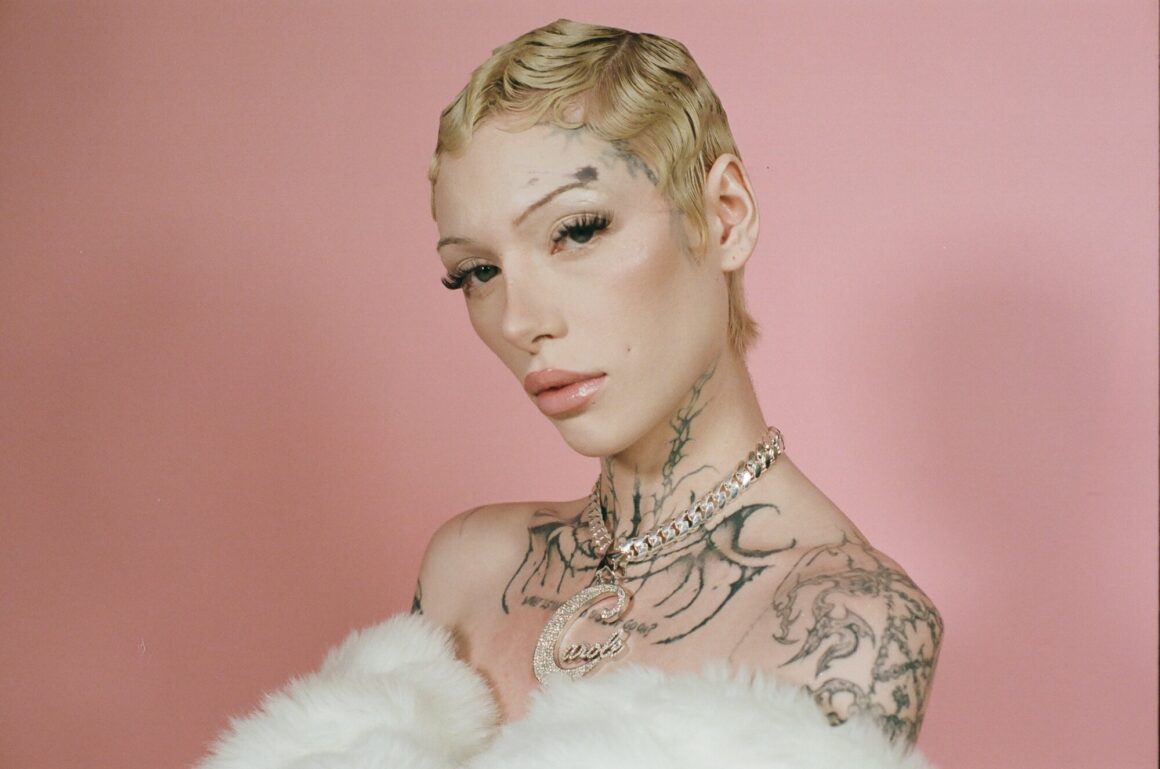
For carolesdaughter, music has always been a reflection of who she is, but You Can’t Spell Sweetheart Without Thea brings that idea into sharper focus than ever. Born Thea Taylor, the alternative-pop artist has transformed years of personal experiences, creative experimentation, and emotional growth into a debut album that feels deeply honest and unapologetically her own.
Best known for her double-platinum breakout hit “Violent,” carolesdaughter has come a long way since first making music in her bedroom as a teenager. Now, at 22, she approaches her artistry with a stronger sense of self, embracing the jazz, trip-hop, alternative pop, and experimental influences that have shaped her from the beginning. Across 13 tracks, You Can’t Spell Sweetheart Without Thea explores loneliness, womanhood, self-worth, survival, faith, relationships, and the complicated process of finding your way through adulthood.
In this conversation, carolesdaughter reflects on the personal experiences behind the album, including the loneliness that inspired “The Invisible Man” and the lived experience that shaped the deeply vulnerable “Don’t Raise Your Voice at Me.” She also opens up about questioning faith on “No Name No. 1,” growing into her identity as an artist, and learning to trust her own instincts after finding success at such a young age.
Rather than chasing what is currently popular, carolesdaughter chose to follow her instincts and create a record that sounds like her. As she puts it, the album is about becoming “more her,” while refusing to compromise what makes her different. The result is a project that finds beauty in vulnerability and comfort in simply being honest.
From the lessons of early success to the excitement of taking her new music to audiences in the UK and Europe, carolesdaughter gives us a closer look at the woman behind the music and the deeply personal world of You Can’t Spell Sweetheart Without Thea.
For readers discovering you for the first time, who is carolesdaughter?
Who I am as an artist is exactly who I am as a person. I don’t think it’s possible to explain in a few words, but the closest you’re gonna get to understanding who I am is listening to the album. We’re all unique and complex, but the one thing I can’t stand is being fake, so I’m just me.
Congratulations on releasing your debut album, You Can’t Spell Sweetheart Without Thea. What inspired the release of this project?
Honestly, making the song “Don’t Raise Your Voice At Me” inspired the sound of the album. I was really inspired to make that song, it was begging to come out of me. I love it when it feels like that. I fell in love with that jazzy experimental kind of sound, and I just ran with that and continued trying new things. Which is how I used to always make music, every song trying to top myself.
You’ve described this as your most vulnerable body of work. Was there a particular moment during the writing process when you realized you were creating something much more personal than anything you’d released before?
I feel like this album was especially vulnerable because I was leaning into a sound I knew isn’t the most popular on the internet or not like what I was hearing ‘blowing up’ or whatever. I don’t care about that. I really just wanna make music that I think is cool and unique. So it was a vulnerable release because it was different, and I was standing on it instead of trying to appeal to everyone
Across the album, you explore loneliness, womanhood, self-worth, survival, family, faith, and healing. Which of these themes was the most emotionally challenging to write about?
“No Name No. 1” was probably the most emotional song for me because it’s something I’m still in the middle of processing. I don’t know how I feel about a higher power, and sometimes a song is not always a sure perspective. The weakest version of myself has picked me up every time, yet the religious indoctrination I went through sometimes still makes me want to believe I have someone else there for me. It’s confusing to be born into a high-pressure religion such as Mormonism, trying to navigate the world after. Mainly it’s just hard to believe it could all be so cruel without any possible comfort after and during, so I see why people are religious
“The Invisible Man” captures a kind of loneliness that goes beyond simply being alone. What inspired you to tell that story?
My upbringing and feeling like I don’t fully belong my whole life. And my experience with so many best friends and lovers doing me dirty.
Songs like “Don’t Raise Your Voice at Me” tackle the difficult subject of domestic abuse. How did you approach writing such a deeply sensitive and important song while keeping it authentic?
I honestly just wrote exactly what I felt and what came to mind; it came very naturally. That’s my experience to write about, and I never questioned for a second if that was gonna be on the record. I actually wrote the rest of the record around this song since it was the first one I made off it. I hope it helps someone
Amy Winehouse, Nina Simone, Future, Portishead, and the SoundCloud rap scene have all influenced you in different ways. How have those influences evolved into the sound fans hear on this album?
I think if you have paid attention, this album should not really be shocking sound-wise; to me, it made the most sense if you listen to my early work. It’s just who I’ve always been, I’ve just become more her.
You first gained global recognition with “Violent,” which became a massive hit while you were still a teenager. How has your relationship with success changed now that you’ve had time to grow both personally and creatively?
I think I have more perspective on how blessed I am to have had this experience at such a young age and to be able to continue making my art. There really aren’t words to express how deeply grateful I am to have found success in what I always knew I wanted to do.
You signed to a major label at just 18 years old. Looking back now at 22, what are some of the biggest lessons you’ve learned about the music industry and about yourself?
I have learned to listen to nobody but myself at the end of the day.
“Jean Paul Gaultier” explores womanhood and protecting your peace. How has your understanding of femininity and self-preservation evolved over the past few years?
You grow up a lot from 18 to 23, from basically a child to a woman. I have evolved to know my place as an artist and to own it and to keep going in my direction and to trust myself indefinitely.
You’re heading out on your UK and European headline tour as well as performing at Vans Warped Tour. What excites you most about bringing this new era of carolesdaughter to the stage?
It was incredibly fun!!! To meet new fans and to see faces I recognized from years ago, I felt the
love so much on that tour. Warped Tour has also been a really fun festival to play. It’s very iconic in the alternative world.
After listeners finish You Can’t Spell Sweetheart Without Thea, what’s the one feeling or message you hope stays with them long after the music ends?
I hope it’s something they can come back to again and again that comforts and gives them peace, like it has given me to make it and put it out into the world.
You Can’t Spell Sweetheart Without Thea is carolesdaughter at her most fearless and emotionally honest. Blending alternative pop, jazz, and atmospheric textures, she turns loneliness, vulnerability, and personal growth into something strikingly intimate. It is a record that doesn’t chase trends or easy answers, but instead embraces the beauty of being unapologetically yourself