
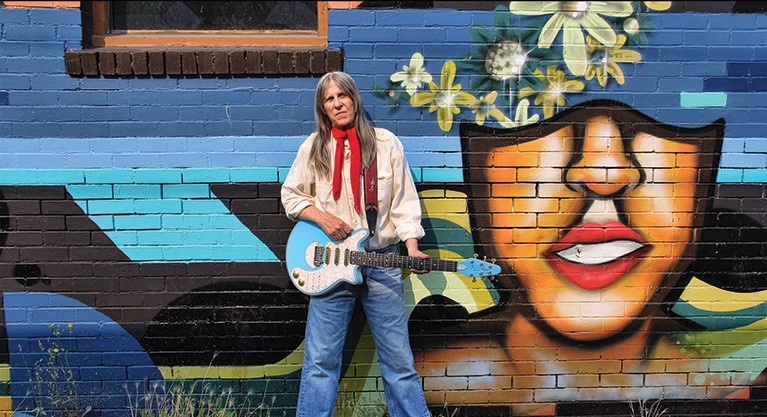

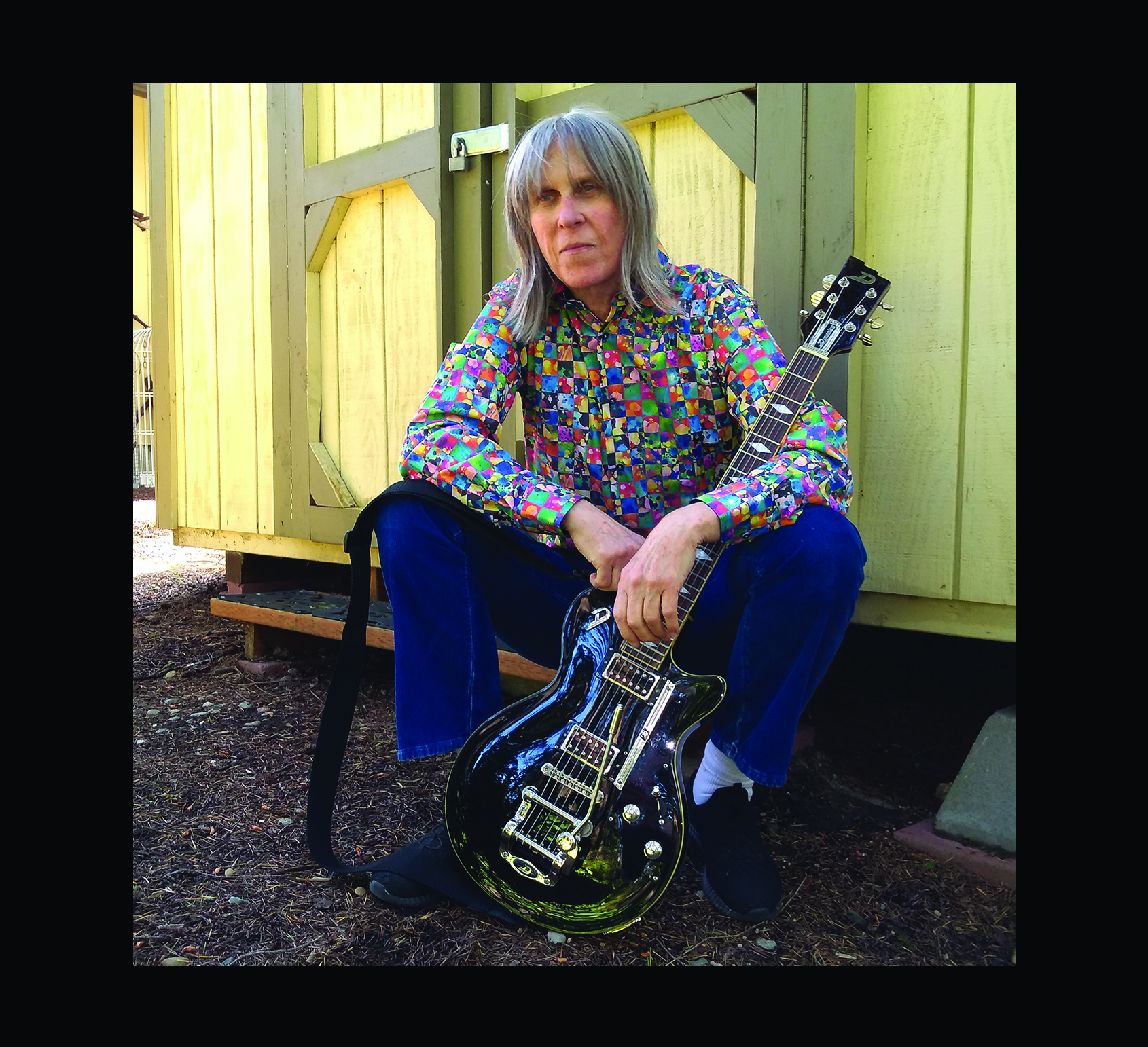
Rusty Reid’s music is shaped by movement, curiosity, and a deep appreciation for the craft of songwriting. Originally from West Texas, the American indie folk-pop-country-rock singer-songwriter has spent time honing his craft in Houston, Nashville, and Los Angeles before eventually settling in the Pacific Northwest near Seattle. Along the way, he absorbed a wide range of influences, from country and Tex-Mex instrumentation to rock, folk, New Wave and the rougher edges of the Pacific Northwest sound, all of which continue to find their way into his guitar-led music.
Now, Reid returns with “I Can See Clearly Now,” his latest single from Lone Stardust (Masterworks of Texas Songwriters), a 19-song collection celebrating songwriters connected to the Lone Star State. His take on Johnny Nash’s beloved classic is less about radically reinventing a familiar song and more about understanding what made the original work so beautifully in the first place, while bringing his own voice, guitar playing and personality to the recording.
For Reid, Lone Stardust is ultimately an exploration of songwriting itself — its melodies, rhythms, lyrics, arrangements and emotional possibilities. The album moves between familiar classics and lesser-known compositions, inviting listeners to look beyond the surface of each song and appreciate the craft behind it.
In this conversation, Rusty Reid discusses the enduring brilliance of Johnny Nash’s “I Can See Clearly Now,” why he chose to stay close to its original arrangement, the musical influences gathered throughout his journey from Texas to the Pacific Northwest, and the unexpected beginnings of Lone Stardust.
For readers discovering you and your music for the first time, who is Rusty Reid?
Rusty Reid: I’m an American Indie, folk-pop-country-rock singer-songwriter, originally from West Texas, but cut my songwriting teeth in Houston, spent some time in Nashville and Los Angeles, winding up in the Pacific Northwest near Seattle. I’m primarily a guitar player, so my “sound” is generally (but not always) centered around that instrument. I do seek out players from around the world to lend their talent and vision to the songs they help flesh out. Thematically, for a while now I’ve been trending into more political, philosophical, and/or “spiritual” (not religious) explorations. I come from a very liberal, universalist perspective. I’ve taken on some weighty subjects. My best album to explore that side is Head to Heart. If you’ve ever wanted to hear the history of the Universe in one song, or know “the meaning of life,” I’ve got it for you there.
You’re back with another single from your album Lone Stardust (Masterworks of Texas Songwriters). What made “I Can See Clearly Now” the right song to revisit for this release?
Rusty Reid: Oh, I think it’s one of the best pop tunes ever written. It may sound almost childlike simple, but it’s actually very cleverly crafted and unique, and that’s one of the hardest things to pull off as a songwriter. Almost everybody loves it immediately; that’s a rare thing right there. Johhny Nash was a Texas treasure, as well, so it was one of the very first songs I determined this album of songs by Texas songwriters simply must include.
You describe Johnny Nash’s original as almost the perfect pop song. What is it about the song that has made it so timeless for you?
Rusty Reid: Yeah, the first thing that hits you is the rhythm. It may sound familiar now as we’ve all heard it, and other songs like it, many times now. But when it came it out, that rhythm was something new. It was reggae. Few Americans had heard that before. But Johnny had been exploring it for some time. Reggae lends itself to more serious thematic content. And sure enough, in this song Johnny puts aside the usual romantic or relationship theme and delves into the individual inner psyche of someone who’s been “blind,” going through the grind of some kind of “obstacles” and “bad feelings.” But there’s also an upbeat lilt to both the reggae rhythm and its generally optimistic, idealistic thematic content. So too with “I Can See Clearly Now.” The singer is coming out of pain, out of the rain, into the rainbow and sunshine. His head and his heart are “seeing clearly now.” It’s a wonderful tale of an epic struggle, the hero’s journey in one little bubbly song. All augmented by this incredible melody and platform for the singer to shine. There have been few such songs before or since.
How did you balance staying faithful to the magic of Johnny Nash’s original while still making the song unmistakably your own?
Rusty Reid: I made the mistake in my press release of comparing my release to other covers of this song, which led some reviewers to think that I sampled those covers before deciding how to do mine. That’s not accurate. I didn’t listen to any other covers before recording mine. Of course, I had heard Jimmy Cliff’s version back in the 1990s. Jimmy sticks fairly faithfully to Johnny’s arrangement. But I didn’t check out any other covers until after I had recorded mine. Only then did I notice the mistakes I think some of them made in trying to reinvent or drastically modify the original version. Some of them go quickly off the rails. There are somber, stripped-down versions, heavy metal versions, overly lushly orchestrated versions, versions where the singer overpowers the song, you name it. In my view, these lose the plot. I never considered deviating much from Johnny’s arrangement. Why mess with perfection? That’s the same orientation I took with about half of the songs on the album. I only deviated when I felt that original version’s arrangement was lacking in some way. For this song, I wanted that reggae rhythm, the chunka-chunka guitars, the drums, the piano, the horns, all the elements that everybody adores in the original. I even sang Johnny’s lines pretty much note for note, with just a few tweaks. My modifications were, first, my voice, which nobody is going to mistake for Johnny or Jimmy. I took on that long, multi-note hold at the end of the bridge, which only later did I discover that few cover versions attempt. I had planned to add harmony to the bridge, as Johnny and Jimmy do with female singers, but then decided to just double-track it instead. And then I push the electric guitar forward on the third verse and outro, playing lines that are not in any other version of the song.
With a song this familiar to audiences, was there any pressure knowing that listeners would already have a strong connection to the original?
Rusty Reid: I never really consider what listeners might expect or want. I’m only concerned with what I want. I think any artist operates from that orientation, otherwise you’re just putting forth a commodity. So I go into recording with something I hear in my own head that I’m going to try to reach for. And then, most of the time, I’m playing with other players… and I want to give them a chance to change my mind. And usually they do… and I think, “Yeah, that’s even better.” At no point do I wonder what anyone else other than us, the team, thinks.
You’re originally from Texas but are now based in the Pacific Northwest. How have those different places influenced your identity and sound as a singer-songwriter?
Rusty Reid: Growing up in West Texas, I absorbed a variety of sounds that still shape my tastes. I’m a sucker for Latin rhythms and Mexican instrumentation, guitars, accordions, trumpets. I love the steel guitars and lap steels and dobros of country music. But then I was listening to Top Forty radio during those formative years, so just like everyone else I got Elvis and the Beatles and Everly Brothers and the Byrds and Simon and Garfunkel and Creedence Clearwater Revival and Glen Campbell. And MoTown. I was soaking up a wide variety of musical influences. When I moved to Houston for college, I was mostly immersed in the local original music scene, which was primarily folk-country-rock and New Wave oriented. My songwriting really improved over those years. Then I moved back to Los Angeles and found myself gravitating toward more organic, more edgy rock acts. My favorite band out there at the time was the Cruzados, which, wouldn’t you know, was headed up by a singer-songwriter, Tito Larriva, who hails from El Paso, Texas, and integrates those very same Tex-Mex flavors that I love so much. Tito gets a song on Lone Stardust. It was in L.A. where I first made a move toward more “social” commentary in my songs. I relocated again to the Seattle area just after grunge had peaked, but nevertheless was influenced by the even rougher edge and intentionally un-perfected soundscapes. In most of my songs, I’m indulging one or a blend of these ancient and newer influences.
The Lone Stardust project is described as a collection of 19 songs by great songwriters with a connection to Texas. What inspired you to build an entire album around the songwriting heritage of the Lone Star State?
Rusty Reid: The idea came about entirely by accident. I never thought I’d be doing an entire album of cover songs. I’d only released two cover songs previously. A work project with my friend, Steven Beasley, produced two songs by Texas songwriters we know. All of a sudden I had two such pretty sweet songs. That’s when the idea dawned to why not just go ahead and do a whole album. Soon the number of songs I wanted to do jacked that up to a double-album. Steve gets a song on the album, and those two very first two projects became the first two tracks on Lone Stardust.
When you revisit songs that are already considered classics, what do you hope listeners discover that they may not have noticed in the original versions?
Rusty Reid: About half of the songs on the album are those many listeners will be familiar with, so they’ll probably enjoy those. But then I’m challenging them with songs they probably have never heard. Only sophisticated listeners will accept that challenge. Most listeners, especially these days, only want to hear the familiar. With all of my versions, what I’m trying to do is to simply honor the song, and the songwriter. With these, I invite the listener to partake not just of the music and vocals but join me on a journey to investigate how the songwriter brought the components of the song together: its rhythm, its chords, its melody, its theme, its lyrics, the instruments that it beckons for. Even as all that is a rational exercise, the real key is to simultaneously float with the emotional flow of the song. The sub-title of Lone Stardust is “Masterworks of Texas Songwriters,” and that’s not just for click-bait; these really are triumphs of the craft. Every note, every word, every emotion is raw, real and carefully selected. It’s been one of the great honors of my life to embrace them as mine.
Looking beyond “I Can See Clearly Now,” what can listeners expect from the rest of Lone Stardust?
Rusty Reid: You’re in the company of some of the greatest songwriters ever. It’s a bit of a roller-coaster ride. From heartbreak and despair to sunny optimism and mystical exhilaration, from a single guitar strumming to lush production values, this album will keep you on alert that change is coming. And why not? It’s the only constant in the world.
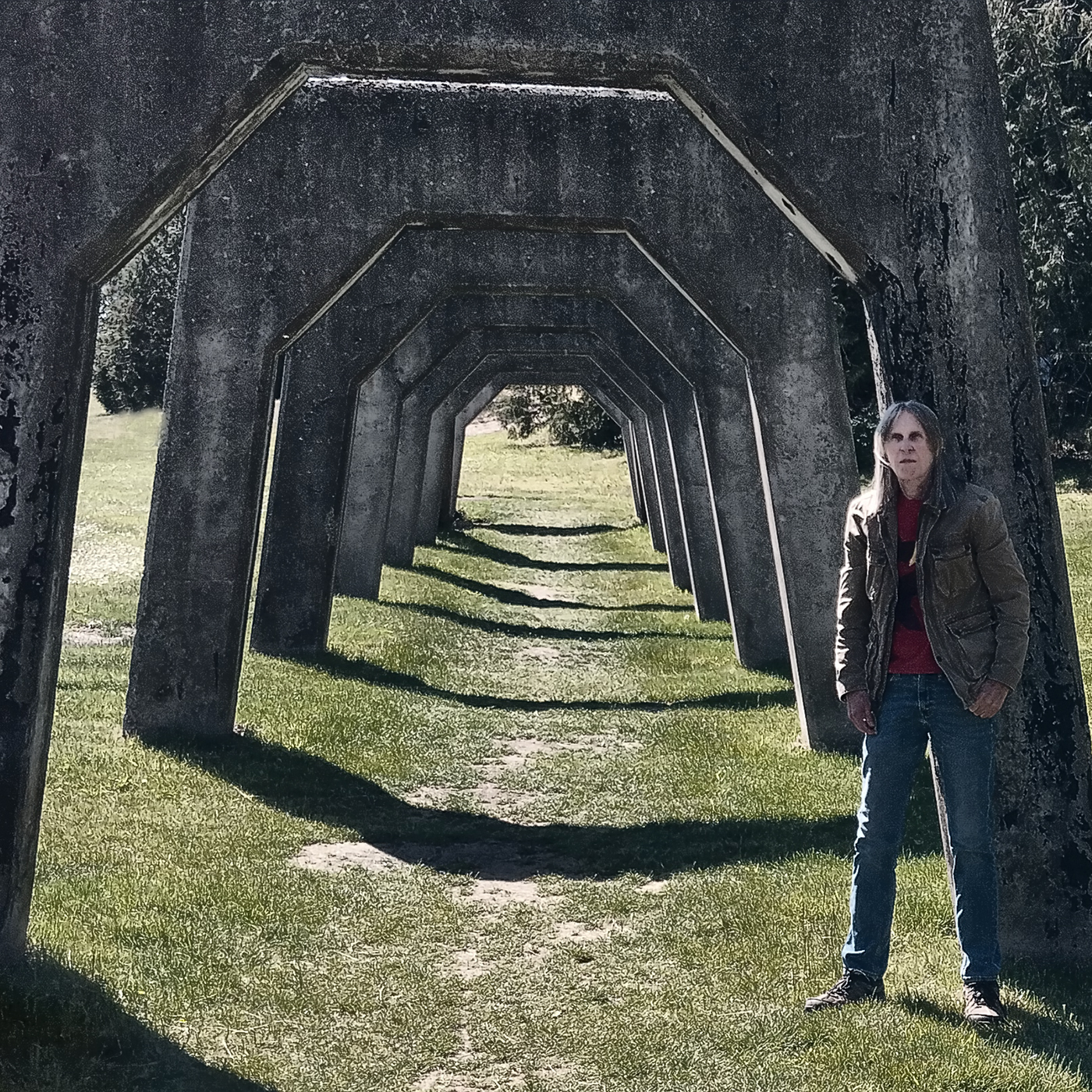
Quick Fire Questions with Rusty Reid
Johnny Nash or Jimmy Cliff?
Rusty Reid: Johnny. He’s the OG, the songwriter, the soul behind the song, and the better singer. Jimmy competes well, but no one comes close to Johnny.
Favorite Texas songwriter?
Rusty Reid: Yikes. All-time: Roy Orbison. Currently: Zack Kibodeaux.
Favorite guitar you’ve ever played?
Rusty Reid: My custom-order orange 1970 Gretsch Country Gentleman. “Pistol.”
One song you wish you had written?
Rusty Reid: “Only the Lonely,” Roy Orbison and Joe Melson. And actually written in my hometown of Midland, Texas.
Recording in the studio or performing live?
Rusty Reid: Studio, by a mile.
Indie, folk, country or rock — which side of your sound comes most naturally to you?
Rusty Reid: All of them are pretty nebulous these days, right? I’m gonna cheat and say country-rock ca 1970, Byrds, Buffalo Springfield, Burritos style, not today’s abomination.
The one album you could listen to forever?
Rusty Reid: Simon and Garfunkel “Bookends.”
One artist you’d love to collaborate with?
Rusty Reid: Brandi Carlile.
Your favorite thing about being a songwriter?
Rusty Reid: The creative process and afterglow when it succeeds.
One word to describe “I Can See Clearly Now”?
Rusty Reid: Sublime.
What is one thing you want listeners to take away from Lone Stardust?
Rusty Reid: Just imagine yourself drifting across Texas from Galveston to Lajitas and feeling the emotional journey.
Rusty Reid’s “I Can See Clearly Now” is a heartfelt tribute to Johnny Nash and the timeless power of great songwriting