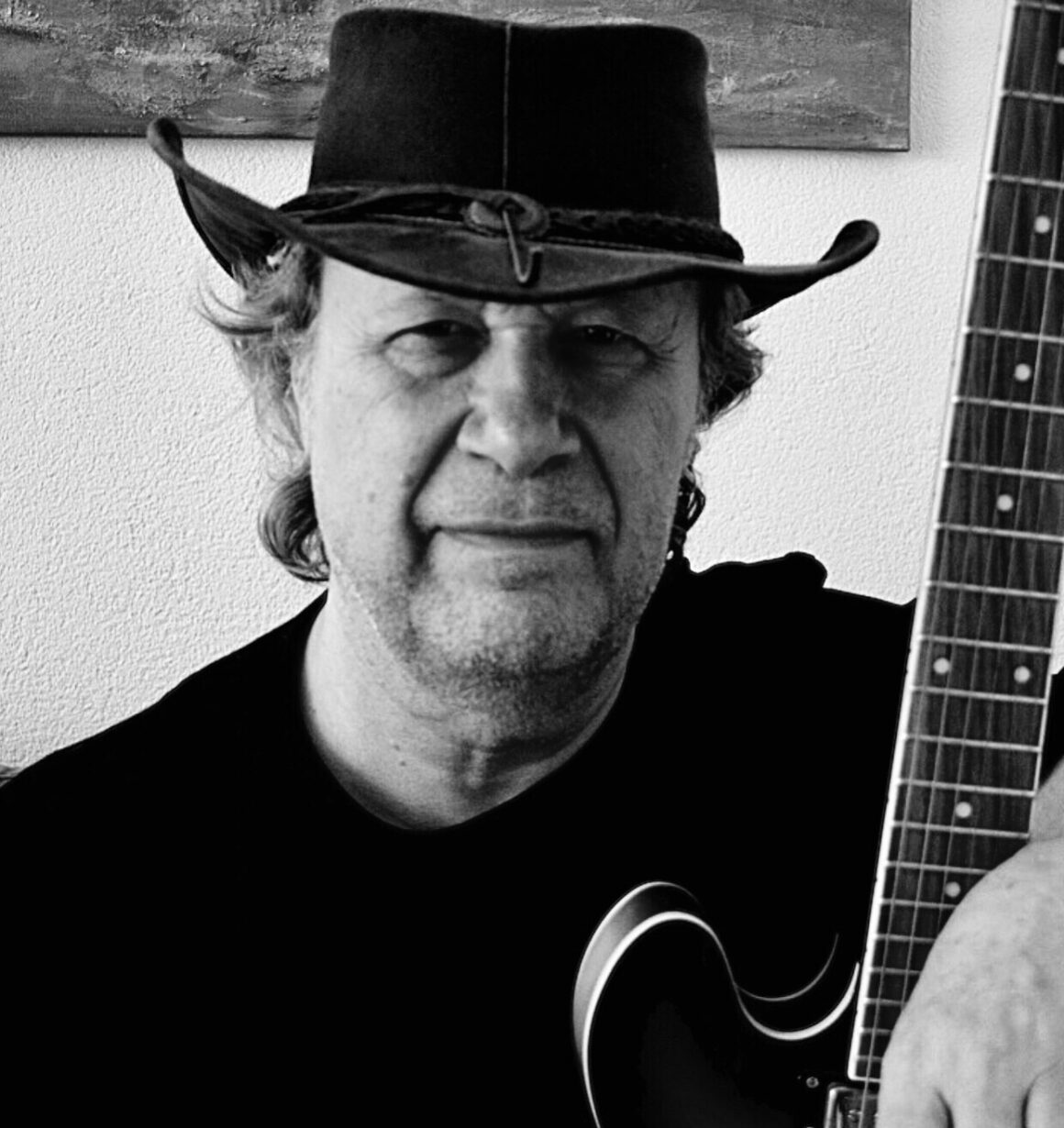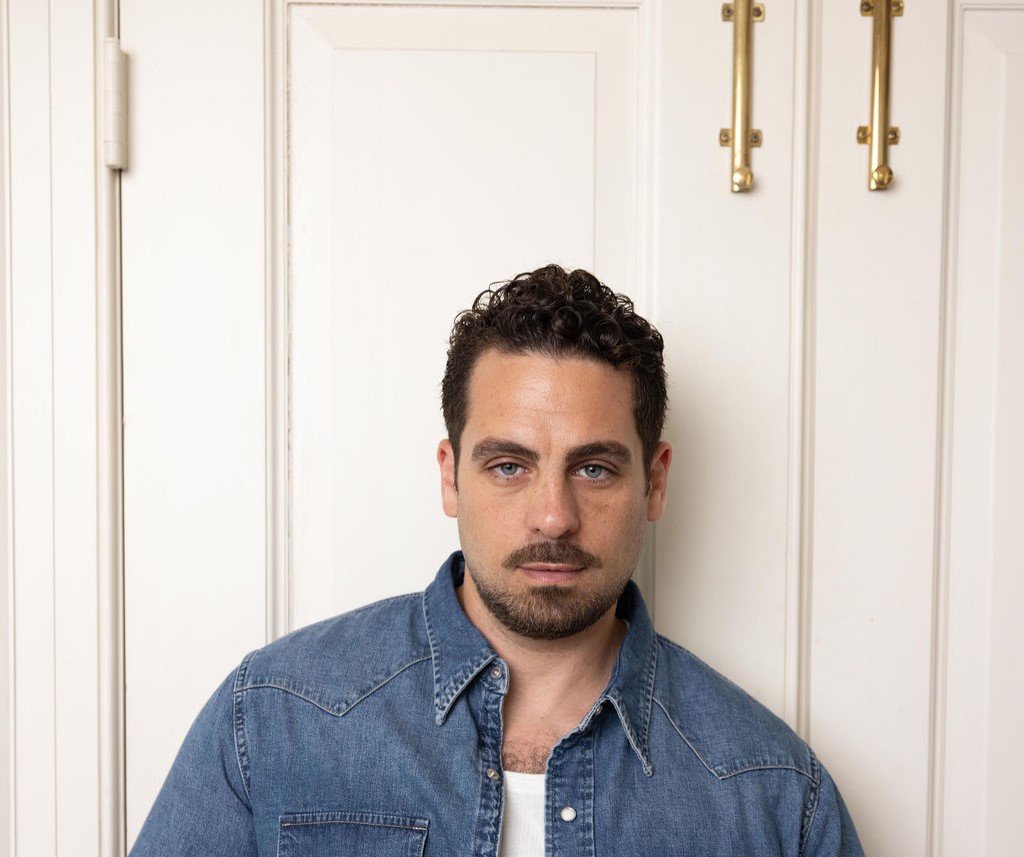

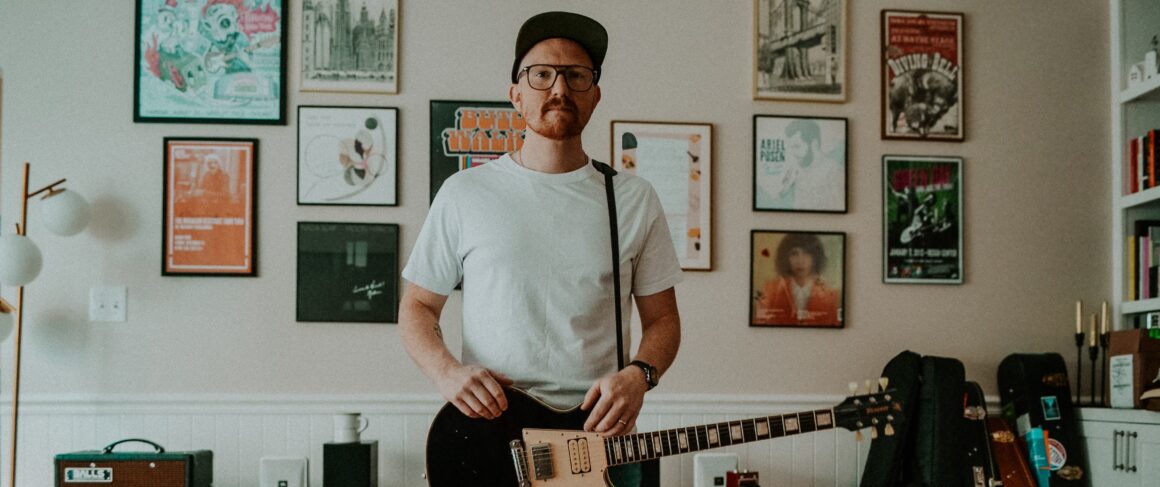
Chicago-based singer, songwriter, and guitarist Frank Gappa returns with his new EP Slow Dancers, a four-track project that captures him refining his emotionally charged indie rock into something sharper, more intentional, and more self-assured. Blending early 2000s alternative and punk influences with reflective, lived-in songwriting, the EP sits comfortably between raw energy and quiet vulnerability.
Mixed by Jim Eno of Spoon and shaped through close collaboration with musicians like Rob Allen and Chris Head, Slow Dancers feels both deeply personal and sonically focused. Across songs like “Move the Needle,” “Cliff Hanger,” “Stay,” and the title track “Slow Dancers,” Gappa explores themes of grief, growth, uncertainty, and creative rediscovery — all while leaning into a sound that feels nostalgic yet fully present.
In this conversation, he breaks down the creative spark behind the project, the challenges of writing some of his most emotional material to date, and what success really means to him as an independent artist carving his own path through Chicago’s music scene.
First of all, for readers discovering your music for the first time, who is Frank Gappa?
Frank Gappa: I’m a singer, songwriter, and guitarist based in Chicago, IL… I also sell harps, but that seems less than applicable to this interview.
Congratulations on your new EP, Slow Dancers. What was the creative starting point for this project, and what inspired the release?
Frank Gappa: Thanks! Honestly, it started with a song that didn’t even make the EP. I had reached out to Rob Allen about doing some drums on a track that I was recording at home, and that sort of sparked everything.
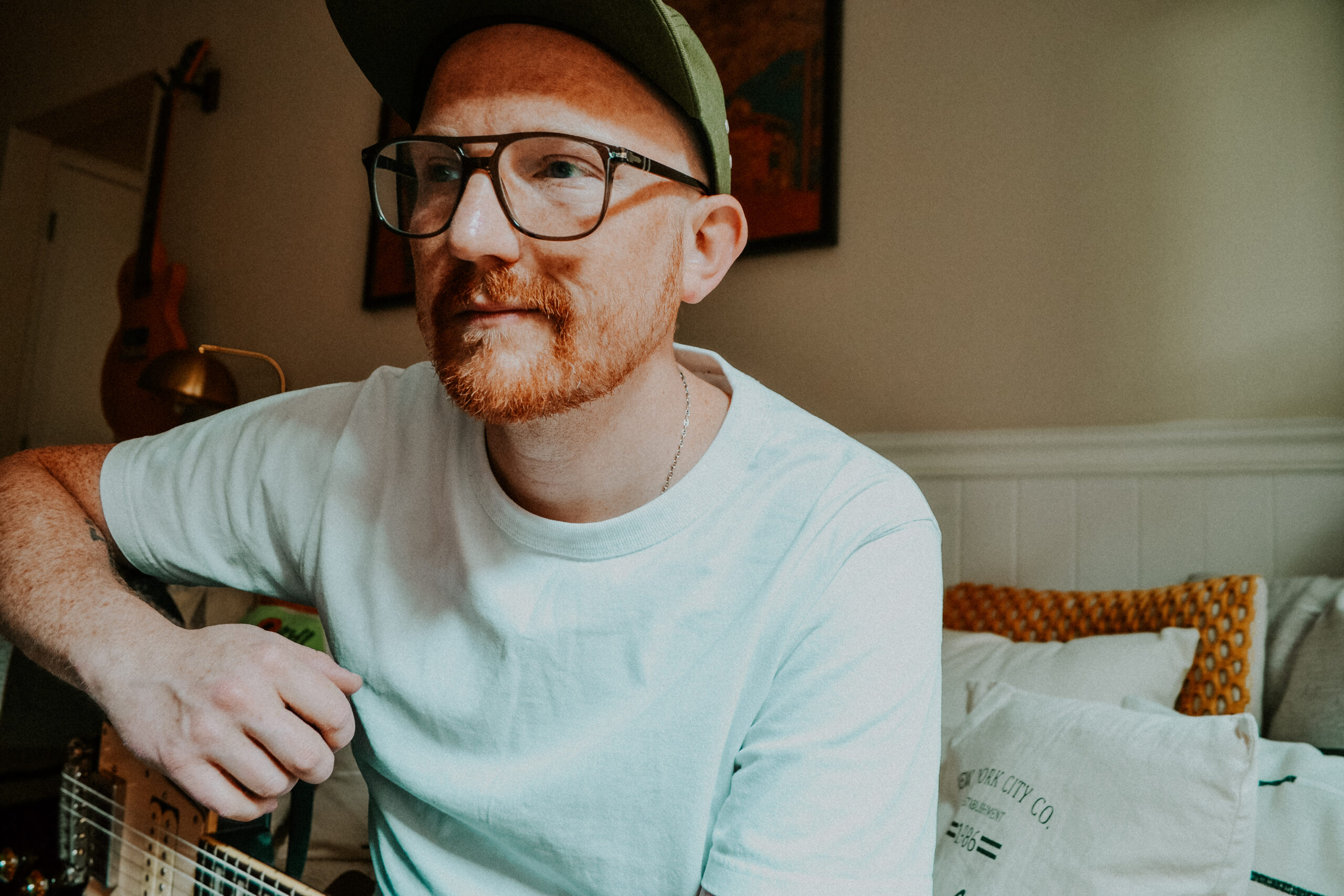
The title Slow Dancers is quite evocative. Why did you choose it as the title of the EP, and what does it represent to you?
Frank Gappa: This one’s kind of funny, actually. Rob and I were working closely, and he was definitely helping challenge/shape my writing and co-producing. We had a few tracks in the works, Cliff Hanger and Move the Needle, and we had a call one day. He told me I needed to write a song people could dance to. What he meant was something upbeat and fast, more poppy. To be cute, after that call… I picked up my acoustic guitar and said to myself, “OK I’ll write a song that people can dance too” …and the chorus came out “this one’s for the slow dancers.” I cheekily sent it to Rob, and he dug it. After that, I knew I had the title and title track for the EP.
“Cliff Hanger” stands out lyrically with its tension between hope and uncertainty. What was going through your mind when writing that song?
Frank Gappa: As simple as it sounds, I was thinking about different movies and different characters I look up to. And then moving that to historical figures and even family members that we look up to. There’s a quote in the first Spider-Man movie with Tobey Maguire, where the Green Goblin says “But the one thing they love more than a hero is to see a hero fail, fall, die trying.” That quote really stuck with me and certainly inspired this idea of fallen heroes.
The EP blends early 2000s alternative and punk influences with a more reflective tone. What drew you back to that punchier, more experimental side of your songwriting?
Frank Gappa: I’ve been listening to more and more music, the past couple of years. Even diving back into my favorite albums that I used to listen to all the time, but with a more seasoned musician ear, I suppose. Honestly, most of my favorite bands are still the ones that I listened to when I was young and starting to become a musician. I think some of the punchier tone comes from me letting go a little bit and not striving for perfection, but having fun with my guitar and the recording process.
Which song on Slow Dancers was the most difficult to write or finish, and what made it particularly challenging?
Frank Gappa: They all had levels of difficulty to some extent. Some of them had more back-and-forth with Rob, who is a big help in shaping these songs, but I think the one that was the toughest was “Stay.” I wrote it after my wife’s aunt had suddenly passed away. We were very close to her, and it was a big loss for the family. Needless to say, writing it was emotional for me but a necessary part of my grieving process. I knew I wanted to put it on the EP, but when it came to recording it, it felt off. I tried to record it to a click track, but it just felt too stiff and like I was trying to make a perfect song. I tried a couple of takes and even some different endings with other layers, but what ended up on the EP is a live no-click recording that I did in my apartment in one take. It felt right.
Which song pushed you the most out of your comfort zone?
Frank Gappa: Definitely Cliff Hanger. When I started demoing the song, I sent it to my friend Chris Head and asked him to play bass. He said he came up with some guitar parts that he wanted to share with me if I was interested. Naturally, I was. What he sent me was what is on the EP. I was so excited about the riff, but it was uncomfortable for me because normally, I’m the one coming up with all the guitar parts. It was very fun and challenging having something as a foundation that I had to build the song around, but also wildly outside of my comfort zone as a guitarist.
What was it like working with Jim Eno of Spoon, and what did he bring to these songs?
Frank Gappa: It was really exciting for me to have someone like Jim mix, even hear my songs. Working with him was a breeze and very professional. As much as I would love to tell you that it was an amazing in-studio experience with late nights at the mixing console together, I’d be lying. Everything was done remotely over email, and it went great. Jim has an incredible ear and is widely talented. I gave a few notes and reference tracks, and I’m not kidding when I say he absolutely nailed it on the first try. He really breathed life into my songs.
There’s a strong sense of narrative in your songwriting. Do you usually start with lyrics, guitar ideas, or an emotional concept?
Frank Gappa: Usually, it’s like a one-liner lyric I get stuck on and build the song around with some simple chords, and then go from there.
You released your debut album, Let Me Show You My Jean Jacket, in 2024. How do you feel you’ve grown as a songwriter between that album and Slow Dancers?
Frank Gappa: I’ve learned to have more patience and restraint with my songwriting. I really want to be intentional with this EP. Like I mentioned before, the song that sparked it didn’t even make the EP. That’s not to say that I won’t continue to pursue that song, but I feel good about not just releasing songs for the sake of releasing songs.
What does success mean to you as an artist?
Frank Gappa: This is something I’ve been reflecting on and struggling with for years. And it’s a great question. Without getting too long-winded, I think there are different levels of success as an artist, and I certainly feel like I’ve had successful moments in my career. However, I want to be straight with you. Success to me as an artist would be not having to reach out to venues to book my own band, they would reach out to me. Not tirelessly promoting my own music, but people asking when the next album is going to come out. Not trying to find time to write and record, but having time to get lost in that process.
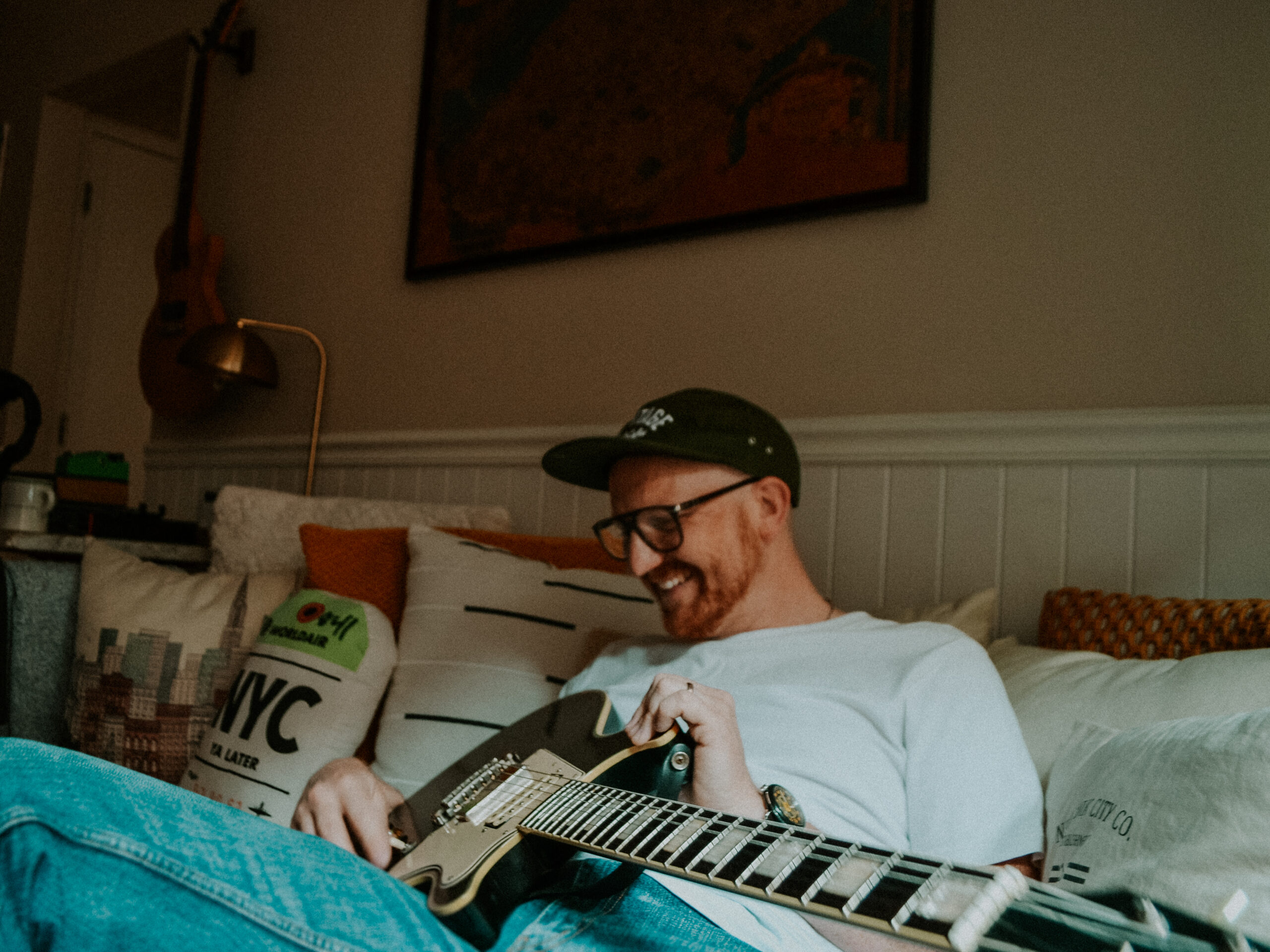
You’ve lived in several cities—Brooklyn, Minneapolis, Milwaukee, and now Chicago. How have those different environments shaped your identity as a songwriter?
Frank Gappa: I guess I’ve kind of adopted this sort of nomadic mentality with my songwriting. I’ve been fortunate enough to write, record, and perform in all of these cities in different capacities. I like to think that it’s made me a well-rounded songwriter and given me endless inspiration for years to come. But there certainly are some drawbacks to having to sort of break into a new scene every few years.
Are there any artists, producers, or songwriters you’d love to collaborate with someday?
Frank Gappa: Butch Walker for sure. I’m a huge fan of his songwriting/producing, and that would be an absolute dream to work with him on a track. Equally, I would love the opportunity to push my songwriting and write for a country or pop artist.
What do you hope listeners take away from Slow Dancers after hearing the final track?
Frank Gappa: I hope that people can relate to these songs and find comfort in them. My goal with music is to move people, and when they hear that final track, they let the album start over and listen again.
What’s next for Frank Gappa? More music, touring, or something completely unexpected?
Frank Gappa: This release has been a lot of work, and it’s been really fulfilling. I’m grateful for the people I’m working with, and I really just wanna keep pushing it and feed off of this momentum. Right now, I’ve got a bunch of shows lined up throughout the summer in Chicago and Milwaukee, and the plan is to keep writing, recording, and gigging.
Message to Fans and readers?
Frank Gappa: First of all, thank you for reading this and listening to my new EP. Secondly, I can say firsthand that it means the world when a stranger decides to take a gamble on an indie rock show at their local venue and ends up seeing my band. So I encourage you to do just that. Check out a show, seek out new music, seek out local music, and support the indie scene because the best music in the world comes out of it.