

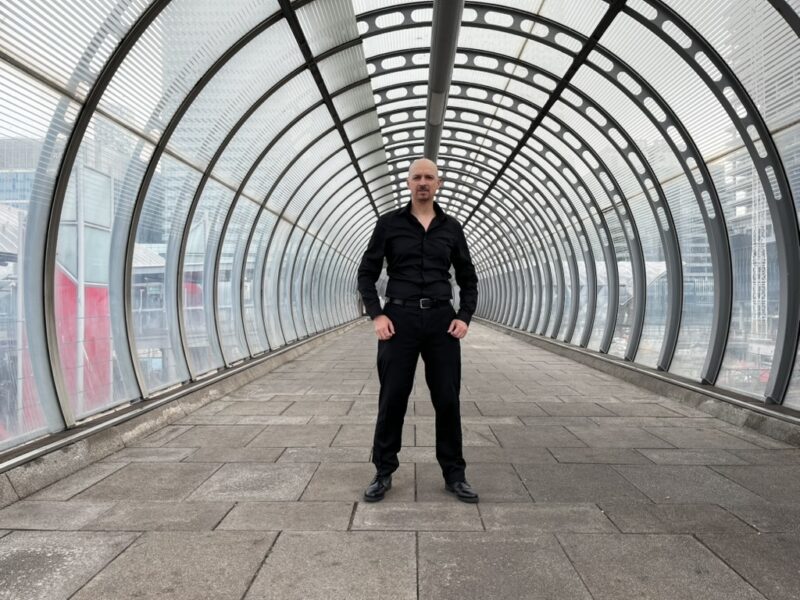
There are some artistic journeys that arrive with a clear destination in mind. Others reveal their meaning only after the first few steps have been taken. For Australian-born, London-based songwriter Christopher Scott Brammer, the Mister Chorister project appears to belong firmly in the latter category. What began as a return to music after nearly three decades away is gradually becoming something more personal, with each release revealing another layer of an artist reconnecting with his creativity, his experiences and perhaps parts of himself that had remained unheard.
Mister Chorister was never intended to be a carefully plotted narrative. Christopher did not set out to create a series of songs that would function as chapters in one larger story. Yet with “Brave,” “Spark” and now “You’re Not Listening,” connections have begun to emerge. The songs may stand independently, but together they suggest an evolving conversation around courage, self-belief, frustration, emotional suppression, and the uncomfortable space between who we are, who we believe ourselves to be, and who we are afraid to become.
That makes “You’re Not Listening” particularly significant within the journey so far. It represents a darker and more introspective turn for Mister Chorister, but its origins were considerably more straightforward. The song began with Christopher’s frustration at feeling that a colleague wasn’t listening to him. It could easily have remained a song about communication breaking down between two people, but the songwriting process encouraged him to look at the situation from another perspective. What if the other person felt unheard too?
That shift in perspective transformed the idea. Instead of simply pointing the finger outward, Christopher began exploring the possibility that both people in the situation were struggling to communicate. From there came an even more personal interpretation: what if the person we are failing to listen to is actually ourselves?
That question became the emotional heart of “You’re Not Listening,” turning what began as an external frustration into an exploration of fear, grief, emotional suppression, and the voices people sometimes choose not to acknowledge. The song captures the feeling of being trapped inside your own head while confronting the invisible barriers that can prevent us from moving forward.
In many ways, it continues the conversation that began with “Spark.” Christopher’s previous release represented another step into a creative world he had rediscovered after years away, and its emotional journey was described as “a quiet conversation slowly building into something powerful.” With “You’re Not Listening,” that conversation has become more intense. The questions are no longer simply about returning to music; they are increasingly about what happens when creativity forces you to confront something deeper.
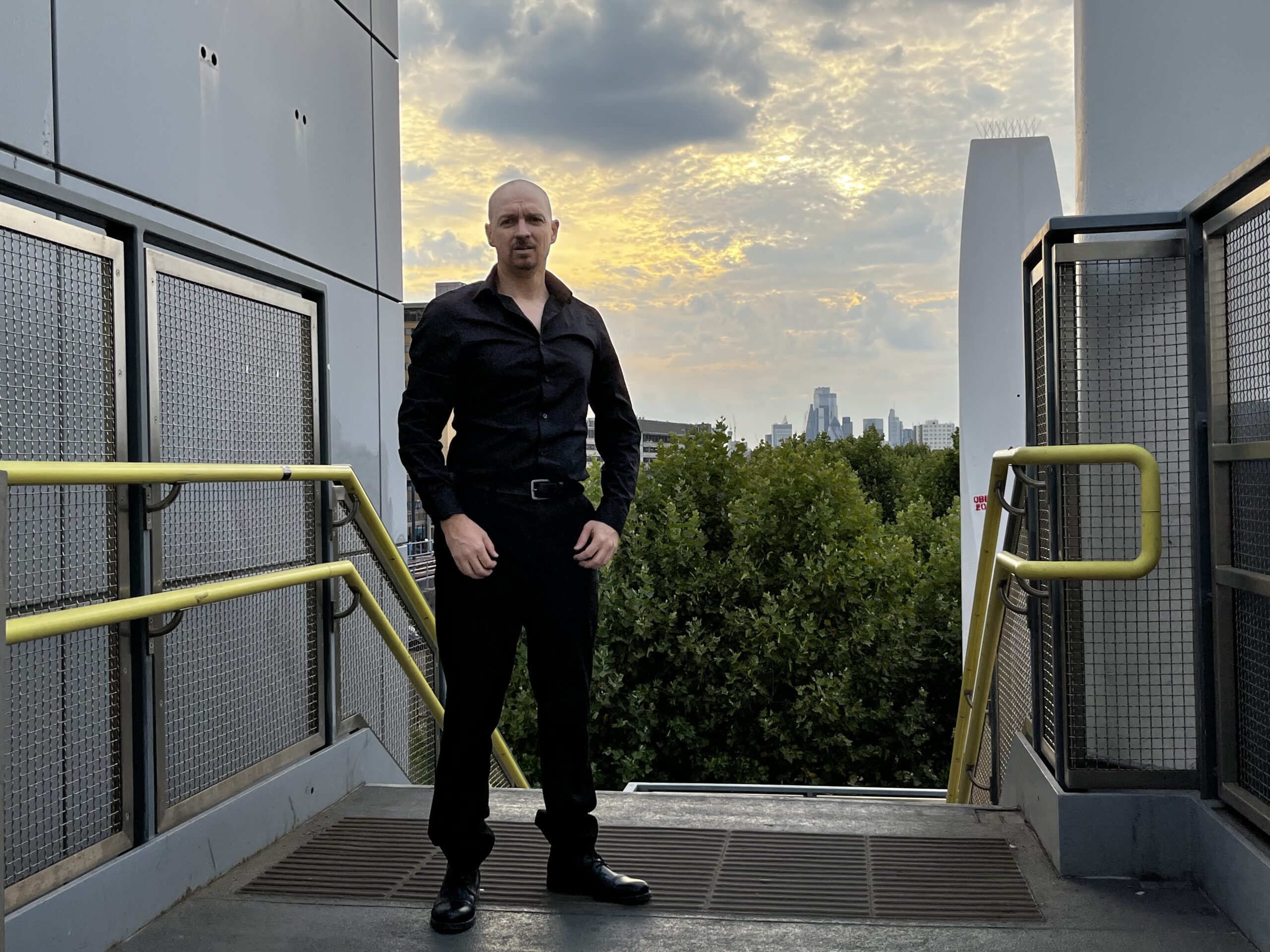
The music mirrors that emotional progression. Produced, mixed and mastered in London by Billy Crabbe, “You’re Not Listening” moves through atmospheric alternative rock, melodic pop-rock and grunge-influenced guitar, deliberately shifting between tension and release. A warbling, surging pad remains present throughout much of the track, while a sliding bass creates an unstable undercurrent beneath the quieter moments. When the choruses arrive, a more stable 16th-note bass pattern introduces a feeling of determination, helping the arrangement move from psychological pressure toward release.
Chris Castellitto’s drums add another layer of urgency, while the guitars give the track its harder edge. The opening Tube Screamer guitar leads into power chords before the song drops into its first verse, creating a striking contrast between intensity and restraint. Later, an eerie melodic guitar figure brings a grunge-influenced character to the second verse, while grand piano chords introduce a more cinematic dimension.
That arrangement becomes particularly important as the song approaches its emotional turning point. The piano roll surrounding the lyric “free… your gaslight is on” feels like a moment of recognition — an epiphany that suggests the possibility of trusting yourself and moving through the internal struggle rather than remaining trapped inside it.
Yet Mister Chorister doesn’t resolve the tension with an oversized finale. Instead, the arrangement moves into an acoustic passage before a shimmering cymbal gives way to white noise and the sound of static being switched off. After all the pressure and noise, there is silence.
It is a fitting ending for a song built around the idea of listening.
The evolution of the Mister Chorister project becomes even more intriguing when viewed across its first three releases. “Brave,” “Spark,” and “You’re Not Listening” were not designed as a connected sequence, but recurring themes have started to make the relationship between them difficult to ignore. Each song seems to occupy a different point on the same emotional landscape, with Christopher gradually moving from the courage to begin again toward a deeper examination of what that beginning actually means.
That is perhaps what makes the project more than a simple comeback story. The fact that Christopher returned to music after almost 30 years will always be an important part of his journey, but the music is increasingly revealing what happens after the return. Rather than simply revisiting something from his past, Mister Chorister has become a space for discovering what might still be waiting to emerge.
There is also something compelling about the fact that Christopher is discovering these connections at the same time as his audience. Because the narrative was not predetermined, each release has the potential to change how the previous one is understood. A song that initially appears to be about another person can reveal itself as a conversation with the self. A return to music can become a confrontation with fear. A creative spark can become the beginning of a much larger personal journey.
Three songs in, the Mister Chorister story is therefore less about looking back and more about finding out where the music is leading next. Christopher appears to be allowing the project to evolve naturally, following the emotional threads that emerge rather than forcing them into a predetermined shape.
And that leaves the journey in an intriguing place. The artist who returned to music after decades away is no longer simply proving that he can make music again. He is using that return to explore identity, creativity, self-belief and the internal conversations that can become impossible to ignore once we finally decide to listen.
Mister Chorister is becoming more than a story about returning to music — it is an unfolding conversation about courage, self-belief and the difficult process of finally listening to yourself.
As “You’re Not Listening” marks the latest chapter in that unfolding journey, the destination remains unknown. But perhaps that uncertainty is exactly what makes the Mister Chorister project worth following. The story was never supposed to be written this way. It is simply revealing itself one song at a time.