

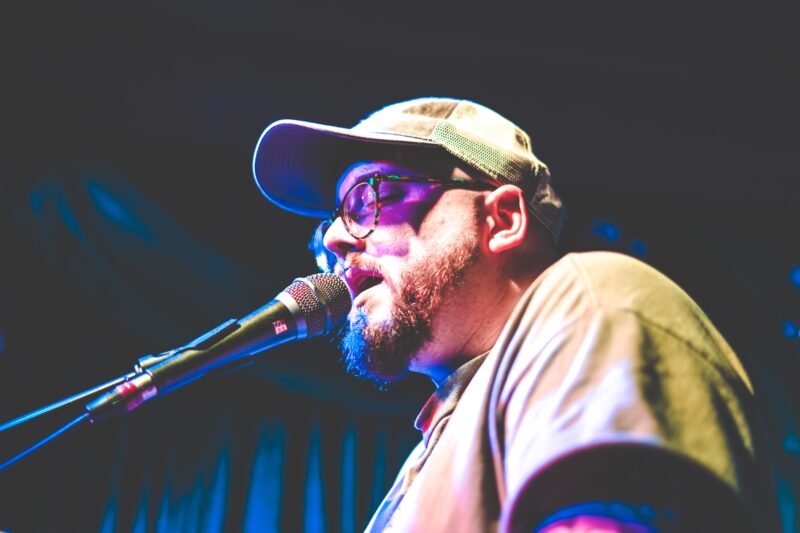

Ethan William Bowers’ Panic Tax feels like the sound of someone stepping back into the spotlight with purpose — not rushed, not tentative, but fully aware of what he wants to say and how he wants to say it. The Fort Wayne, Indiana songwriter is no newcomer; after a long break from releasing music, this four-track EP marks a clear reintroduction. And it lands with weight.
Released on December 20, 2025, Panic Tax is Bowers’ first full band–focused project, created alongside his backing group The Painted Strangers: Cale Gerst on drums, Jacob Gutzwiller on bass, Jonah Leatherman on pedal steel, and Mitch Fraizer on lead guitar. After about a year and a half of writing and refining, the group tracked and mixed the EP with Matt Riefler of Dad Castle in Fort Wayne, before sending it to Tom Beuchel at Flux Studios in New York for mastering. The result is a collection of songs that balances grit and melody, heart and urgency.
Bowers’ musical DNA runs deep. Raised around mainstream country and metal, later discovering pop punk, and eventually diving into indie and folk songwriting, his sound reflects that wide-ranging background. Americana might be the easiest label to reach for, but it doesn’t quite tell the whole story. There’s pop sensibility here, rock tension, and a willingness to stretch beyond genre lines without losing focus.
The EP opens with “Careful Little Game,” a love song that wastes no time pulling you in. It starts with striking guitars before Bowers steps in with lines like “This careful little game that it seems we like to play / If there were no rules, how easy would it be?” The song treats love as something fragile but magnetic, captured in imagery that compares connection to a rope made of thread — delicate, strained, but still holding. The chorus swells with emotion as he admits, “I’m falling down, tripping over my own feet,” perfectly summing up the dizzy vulnerability at the heart of the track.
Next up is “Ordinary People,” a song rooted firmly in the realities of working life. It’s direct, observational, and uncomfortably relatable. Bowers sings about clocking hours behind blocked-out windows and spirits worn thin by routine, asking hard questions about labor, time, and survival. The chorus — “Time ain’t on our side / Trying to survive this great decline” — feels less like a slogan and more like a weary truth. The second verse sharpens the point, aiming at empty promises and systems that keep people just afloat enough to keep going.
“All Things End” shifts the EP into sharper political territory. Framed as a protest against neo-fascism, the song doesn’t rely on subtlety — and it doesn’t need to. Lines like “Suffered silence is often violent” cut straight to the point, while the repeated call to “strike the match, ignite the fire from within” urges action over complacency. “All Things End” carries a driving urgency that mirrors its message, reminding listeners that silence isn’t neutral and waiting isn’t harmless.
The EP closes with the title track, “Panic Tax,” a deeply personal look at mental health struggles. From the opening lines about fear, self-doubt, and feeling trapped inside one’s own head, the song unfolds like an internal monologue many will recognize. The song captures that spiraling anxiety — the exhaustion of pretending to be okay while everything feels like it’s slipping. It’s a heavy way to end the record, but also an honest one, grounding the EP in emotional reality.
Across all four tracks, Panic Tax is defined by gritty guitars, expressive pedal steel, and lyrics that don’t shy away from discomfort. More than anything, it sounds like an artist who has taken his time, trusted his instincts, and returned with something that matters.
With “Panic Tax “, Ethan William Bowers delivers grit, heart, and conviction in every note